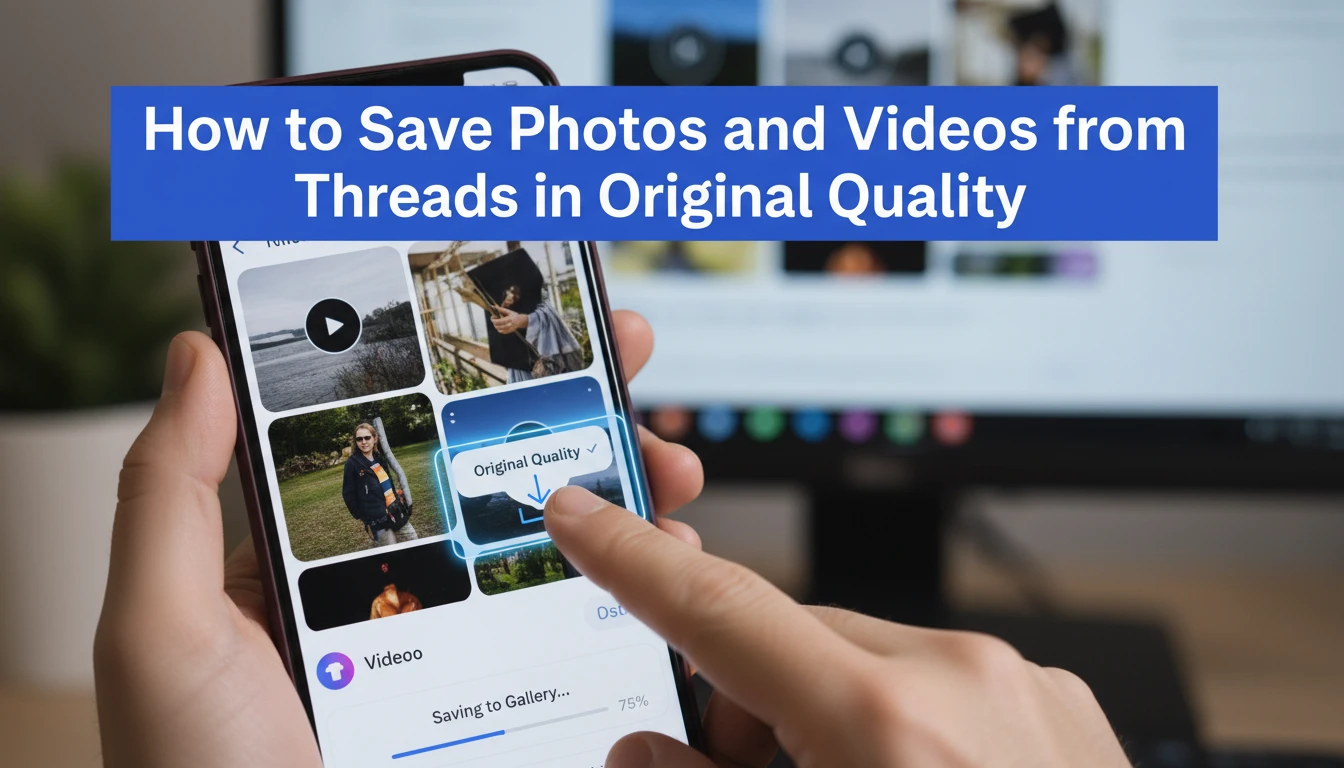
Why People Save Photos and Videos from Threads
Threads mixes photos and videos in a fast-moving feed where useful content can disappear quickly. A sharp image, a short clip, or a visual idea may stand out for a moment and then be lost under newer posts. Many users only realize later that they want to zoom in on details, compare visuals, or reuse the content in another context. Saving media locally removes this dependency on the feed.
Creators often save both formats together. Photos are reviewed for composition, color balance, or typography, while videos are analyzed for pacing, framing, and transitions. During a single research session, it is common to collect 10–25 media files that share a similar visual direction. Over time, these collections turn into reference libraries that support planning, analysis, and reuse.
Step-by-Step Instructions to Save Photos and Videos
Saving photos and videos from Threads follows the same repeatable process. The steps are simple and work across devices, whether you are archiving one post or several.
- Open Threads and find the post that contains the photo or video
- Use the share option on the post to copy its link
- Open an online tool for saving photos and videos
- Paste the copied link into the input field
- Wait while the media file is processed
- Download and save the photo or video to your device
After saving, the files behave like any other local media. On mobile devices, they usually appear in the Files or Downloads folder. On desktop systems, they are stored in the browser’s default download location. A platform such as save thr.com fits naturally into this workflow and is often used when people look for a thread video downloader in hd while collecting visual content.
Supported Formats and Quality Options
Photos and videos from Threads are typically provided in widely supported formats. Understanding how these formats differ helps users choose the right option for storage, editing, or sharing.
| Media type | Common format | Quality characteristics | Typical use cases |
|---|---|---|---|
| Photo | JPG | Smaller file size, compressed | Quick viewing, large collections |
| Photo | PNG | Preserves sharp edges and text | Design review, layouts, archiving |
| Video | MP4 (SD) | Standard resolution, lighter | Offline viewing, storage saving |
| Video | MP4 (HD) | Higher resolution, more detail | Editing, analysis, reuse |
| GIF | GIF | Looping animation, limited color | Reactions, short motion references |
Original-resolution files preserve details such as text overlays, fine lines, and subtle motion. Compressed versions reduce file size but may introduce visual artifacts. When users archive dozens of photos and videos, even small differences in file size can affect how folders are organized and backed up.
Using Saved Media in Real Workflows
Once stored locally, photos and videos become part of structured workflows. Designers group images by theme or visual style. Video editors keep folders with clips that demonstrate specific transitions or pacing. Social media managers review saved media side by side when planning future posts.
Over weeks or months, these folders can grow into large archives. Users often compare saved Threads media with visuals from platforms like Instagram to understand how presentation styles differ. Because the files are stored offline, they can be renamed, tagged, and backed up without relying on the original post.
This approach turns temporary content into long-term resources, making photos and videos from Threads available in original quality whenever they are needed for reference, analysis, or reuse.